$261 Million for Justice Denied: City Council Votes Today on the Guevara Settlement

NEWS FLASH

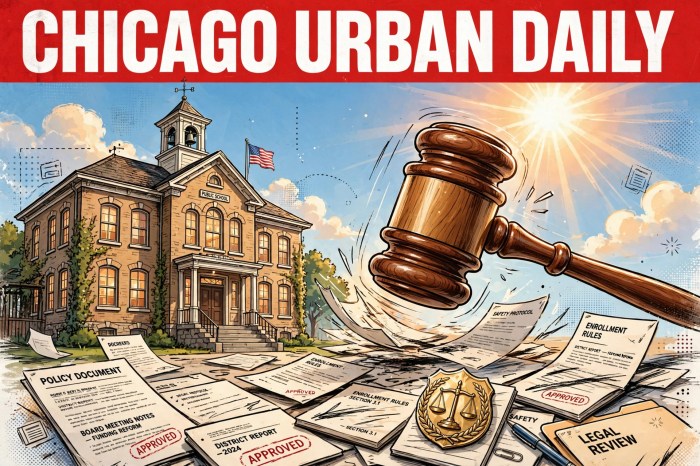
CHICAGO (CHICAGO URBAN DAILY)— Today, the City Council decides what 383 years of stolen life are worth.

Aldermen are expected to vote Wednesday on a $260.8 million settlement for 17 men whose murder convictions were thrown out in cases tied to former Chicago police detective Reynaldo Guevara. If it passes, it would rank among the largest wrongful-conviction payouts in American history — possibly the largest police misconduct payout ever.

The deal, announced October 1 by Mayor Brandon Johnson and Acting Corporation Counsel Renee Hatcher, resolves 16 lawsuits at once. The plaintiffs say they were framed for murders in the 1980s and 1990s on misconduct by Guevara and other officers. Every one of their convictions was vacated and the charges dismissed. The money would be paid out over two years, beginning in 2027.

The vote is not without friction. Ald. Raymond Lopez of the 15th Ward, joined by 12 colleagues, has pressed the city’s top attorney to rethink how these settlements get paid — pointing to Francisco Nanez, who collected an $8 million payout after his conviction was overturned in 2022 and later landed back in custody. The Law Department says this settlement will be distributed over two years rather than in a single check. Lopez called that “a step in the right direction.”

The alternative to settling is stark: city attorneys estimate fighting on could burn another $300 to $400 million in legal fees alone.

Stay tuned to Chicago Urban Daily for the vote and what comes next.

Reported by Chicago Urban Daily News. Visit chicagourbandailynews.com for updates.

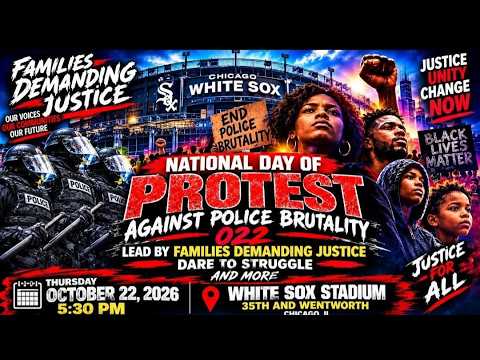
The National Day of Protest Against Police Brutality: Why We Still March

Every year, the National Day of Protest Against Police Brutality calls America to account. It is a day when families, organizers, and everyday people stand together and say what too many institutions still won’t: the violence must end.

In a new episode of the Amir Shakur Speaks Broadcast Channel, Amir breaks down why this day matters — not as a date on a calendar, but as a living demand. From the streets of Chicago to cities across the nation, the protest is a reminder that behind every statistic is a name, behind every name is a family, and behind every family is a community refusing to be silent.

The struggle against police brutality did not end with any single verdict or any single march. It continues in courtrooms, in city councils, in police departments, and in the hearts of mothers who should never have had to become activists. The National Day of Protest is where all of that resolve gathers in one place, at one time, with one voice.

This is bigger than one day. It is about a nation deciding, finally, that Black life is precious — not in speeches, but in policy, in practice, and in power.

Watch the full episode, share it, and show up. The families are still marching. The question is whether America marches with them.

https://www.youtube.com/live/OEFQwGnqRaw

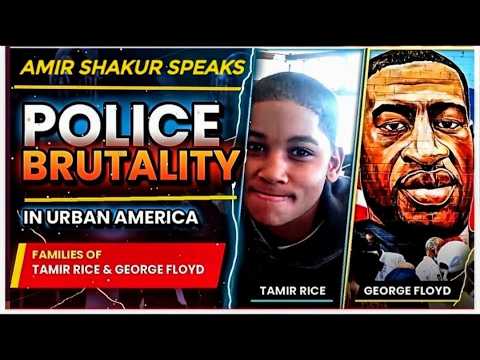
George Floyd and Tamir Rice Families Speak Out: Confronting Police Brutality in Urban America

Some conversations you don’t watch — you witness. In a powerful new episode of the Amir Shakur Speaks Broadcast Channel, the families of George Floyd and Tamir Rice sit down to confront the crisis of police brutality in urban America. Not as headlines. Not as hashtags. As mothers, fathers, and loved ones carrying a pain that never leaves the room.

George Floyd’s name shook the world in 2020. Tamir Rice was twelve years old — a child with a toy gun, gone in seconds in Cleveland. Years apart, cities apart, but the same wound: Black lives taken by the very people sworn to protect them, and families left to turn grief into a movement.

This is why the work matters. When the cameras leave and the protests fade, the families remain. They carry the memory, they push the policy, they refuse to let America forget. Their courage is the reason conversations like this one exist — and the reason they must continue.

Amir Shakur has long stood with these families, using his platform to amplify the voices the mainstream moves past. This episode is not entertainment. It is testimony.

Watch the full conversation now, share it with someone who needs to hear it, and stand with the families still fighting for justice.

https://www.youtube.com/live/V7sVr4YL-o0

Tax the Rich or Starve the Budget: Johnson Draws His Line Two Weeks Before the 2027 Budget Reveal

CHICAGO URBAN DAILY

CHICAGO (CHICAGO URBAN DAILY)— Two weeks out from the most consequential budget address of his mayoralty, Brandon Johnson made his playbook plain: tax the rich.

The mayor says his 2027 budget will “level the playing field” against corporations pulling in record profits while working people “are standing in lines for food,” the Sun-Times reported. And he’s doubling down on the tech taxes that have outperformed expectations: the cloud tax on computing and software platforms, a higher tax on online sports betting, and a tax on social media companies still tied up in court, with its revenues held in escrow.

The context is brutal: a projected $882.4 million hole in the 2027 budget. And City Hall’s opposition has already drawn its own lines. The 29-member Budget Accountability Coalition told Johnson last month: no property tax increase, no head tax or tax on job growth, no counting on Springfield money that hasn’t been approved.

Johnson answered the coalition directly, accusing his council opponents of “coddling individuals that are already being protected by Donald Trump.” The mayor vowed his budget would take the side of working people — “That is it. That is all.”

Twenty-nine votes can pass a budget. It takes 34 to override a veto. And a mayoral election lands in February. This fight is the whole ballgame.

Stay tuned to Chicago Urban Daily as budget season unfolds.

Reported by Chicago Urban Daily News. Visit chicagourbandailynews.com for updates.
65 Years, One Fingerprint, and a Name Nobody Expected: CPD Cracks the Gloria Kowalewicz Cold Case

NEWS FLASH

CHICAGO (CHICAGO URBAN DAILY)— After 65 years, the file is no longer cold. Chicago police announced Monday they have identified the killer of 8-year-old Gloria Kowalewicz — and he was one of their own.

Gloria was abducted on November 12, 1960, on a short walk from her West Englewood home to a nearby church to receive communion. Her body was later found in a ravine, shot twice in the head. The killing ignited a massive manhunt — local and state police, firefighters, Boy Scouts and veterans fanned out across the city, and investigators questioned more than 1,300 people. It never cracked.

The break came from science that didn’t exist in 1960. The FBI linked DNA from carefully preserved evidence — a bullet, the girl’s clothing, and a white communion purse carrying a fingerprint — to genetic genealogy databases, leading investigators to Thomas F. McInerney Jr., who was 24 at the time and had just joined the Chicago Police Department in 1959.

McInerney went on to serve 28 years on the force, retiring in 1987 as a homicide detective. He died in Las Vegas in 2006 at age 70 — he will never face a courtroom.

“McInerney should never have worn the CPD star, and it is devastating to accept that he was never identified and held accountable while he was alive,” the department said in a statement Monday.

Gloria’s brother Adam, who was an infant when she was killed, said it plainly: “He never paid his dues. You hope he’s going to pay his dues with the good lord.”

Stay tuned to Chicago Urban Daily for updates as investigators review whether the case connects to any others.

Reported by Chicago Urban Daily News. Visit chicagourbandailynews.com for updates.
Lights, Camera, Chicago: The 62nd Chicago International Film Festival Opens Wednesday

CHICAGO URBAN DAILY

CHICAGO (CHICAGO URBAN DAILY)— Tomorrow, Chicago’s movie screens get the star treatment. The 62nd Chicago International Film Festival opens Wednesday, October 14, running through October 25 — 113 feature films and 57 shorts from around 60 countries, the longest-running competitive film festival in North America.

The opening night selection is “Club Kid,” the new comedy-drama from writer-director-star Jordan Firstman, who will also receive the festival’s Breakthrough Award. The festival closes October 25 with Tony Gilroy’s “Behemoth!,” starring Pedro Pascal, Olivia Wilde, Eva Victor and Will Arnett.

The lineup runs deep with hometown flavor. The City & State program includes the world premiere of “Ever After,” following Michelin-starred Chicago chef Curtis Duffy, while Chicago filmmaking duo Kelly O’Sullivan and Alex Thompson return with the centerpiece selection “Mouse.” Honorees this year include Sophie Okonedo, Carrie Coon, Aunjanue Ellis-Taylor and Marlon Wayans, with Bob Odenkirk and Tim Blake Nelson scheduled to appear in person.

And it’s not all red-carpet prices: the festival is hosting free community cinema screenings, film talks, and its first-ever Physical Media Fair October 17–18 for collectors to trade LaserDiscs, VHS, DVDs and Blu-rays.

AMC NEWCITY is the festival’s main home, with events at the Music Box, the Gene Siskel Film Center, the Logan Center and more. General tickets run $22, $18 for weekday matinees.

Chicago, the cameras are rolling.

Stay tuned to Chicago Urban Daily for more on the city’s biggest week in film.

Reported by Chicago Urban Daily News. Visit chicagourbandailynews.com for updates.
Picket Lines Before the Starting Line: Hotel Workers Strike Six Downtown Hotels as Marathon Weekend Hits

NEWS FLASH

CHICAGO (CHICAGO URBAN DAILY)— Hundreds of hotel workers walked off the job Friday morning at six of downtown Chicago’s biggest hotels, throwing picket lines up right in front of the city’s biggest tourism weekend of the fall: the Chicago Marathon.

The strike, called by UNITE HERE Local 1, hit the Millennium Hotel Knickerbocker Chicago, the Palmer House Hilton, the Sheraton Grand Chicago Riverwalk, the Waldorf Astoria Chicago, the Westin Chicago River North, and the Westin Michigan Avenue Chicago. Room attendants, cooks, dishwashers, bell staff, front desk agents, servers, and bartenders all joined the walkout after contract talks collapsed.

This is just the opening shot. More than 7,000 workers across 46 hotels voted last month — by an 85% margin — to authorize a strike after contracts expired August 31. Local 1 President Karen Kent says workers at any of the remaining properties “could be on strike at any moment,” and the union has warned as many as 40 more hotels could join the line.

The demands are straightforward: better wages, stronger health care and pension benefits, civil rights protections, and safer workloads. The union notes Marriott, Hilton and Hyatt have returned billions to shareholders in recent years — and says the workers who make the guests’ stays possible haven’t seen their share.

The timing is no accident. The walkout landed two days before the 48th Chicago Marathon, when tens of thousands of runners and spectators flood the city and hotels like the Sheraton Grand sell out completely. Union leaders know exactly the leverage a packed city gives them.

As of Monday morning, the union has announced no end date. The hotels say they plan to keep operating, but marathon-weekend guests should expect thinner service.

Stay tuned to Chicago Urban Daily for updates as this labor fight develops.

Reported by Chicago Urban Daily News. Visit chicagourbandailynews.com for updates.

City Hall Hits Fast-Forward on Camera Tickets: Smart Streets Expansion Clears Committee, Full Vote Set for Wednesday

CHICAGO URBAN DAILY

CHICAGO (CHICAGO URBAN DAILY)— Smile for the camera, Chicago. Your bike lanes are getting watchful eyes — and this time the program is headed citywide and permanent.

On Friday, the City Council’s Committee on Pedestrian and Traffic Safety passed Ald. Daniel La Spata’s ordinance to expand the Smart Streets Pilot, the automated camera enforcement program that tickets drivers blocking bike and bus lanes. The measure cleared committee unanimously and rolls out in three phases, eventually covering the whole city. It could get a final vote before the full Council as soon as Wednesday, October 14.

The numbers La Spata’s office cites are striking. The pilot program has issued more than 140,000 citations and brought in roughly $2 million in revenue. And the deterrent effect appears real: 82% of drivers who get a warning never get a ticket, and 64% of those who do get a first ticket never get a second.

“Too many friends have been seriously injured, and too many families have lost loved ones. We need to design streets for everyone — especially kids getting around in our neighborhoods,” La Spata wrote after the vote.

The committee meeting also delivered a win for the other side of the bike lane. The proposed Divvy/Lyft contract extension was deferred, stalling a deal critics say locks in bad terms for the city.

If the full Council signs off Wednesday, automated enforcement on bike and bus lanes stops being a pilot and starts being the law of the road, permanently — cameras watching every neighborhood, not just the downtown corridors where it started.

Stay tuned to Chicago Urban Daily for the vote.

Reported by Chicago Urban Daily News. Visit chicagourbandailynews.com for updates.